How to Value an Apartment Building Before Selling in Los Angeles
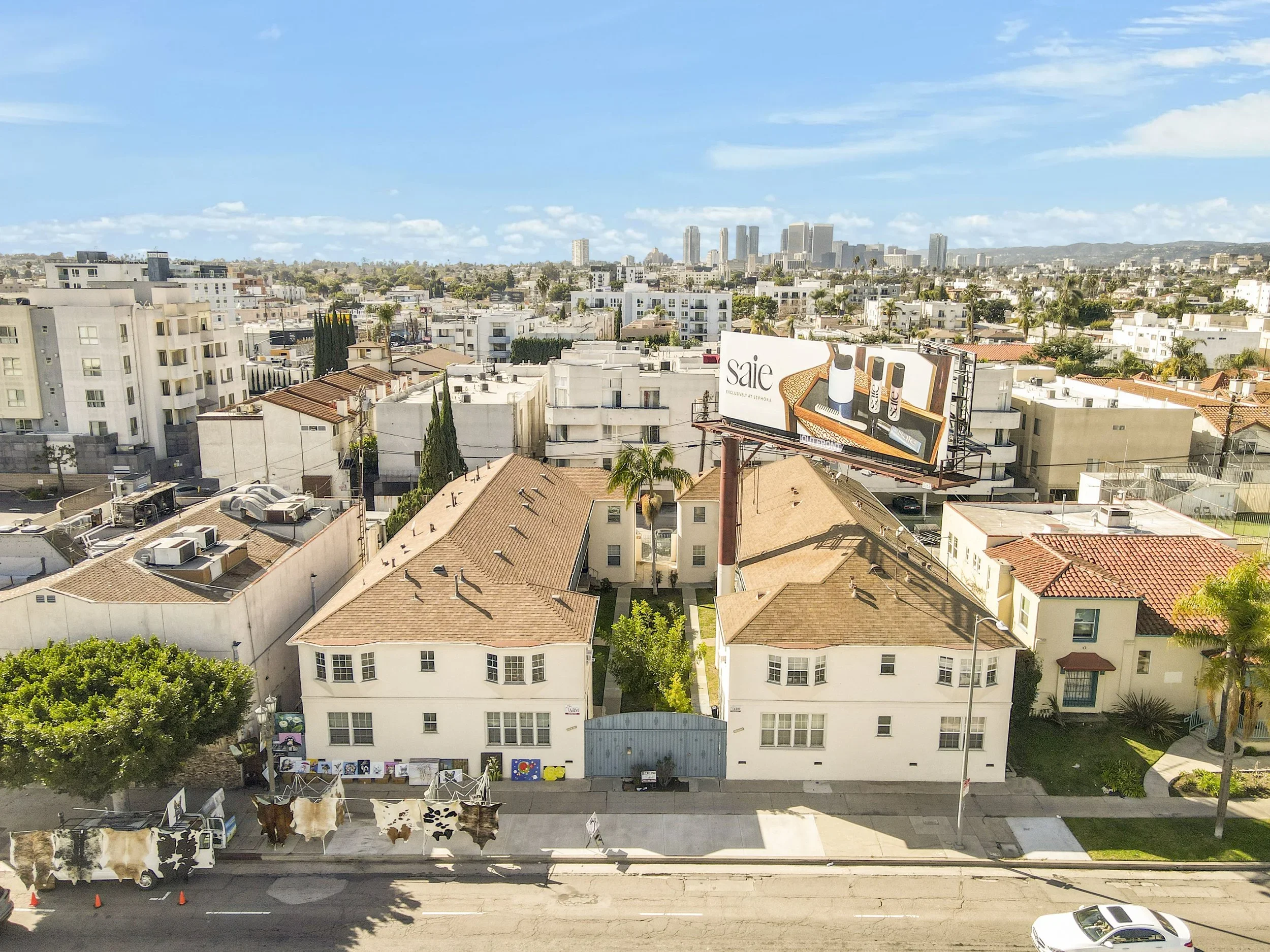
If you are preparing to sell your multifamily property in Los Angeles, understanding how buyers actually evaluate apartment buildings is critical. While valuation metrics like GRM or price per unit are often cited, sophisticated buyers rely on multiple overlapping valuation frameworks, not a single number.
The value of a Los Angeles apartment building is ultimately determined by how income, risk, market conditions, and future upside intersect — and how those factors are expressed through common industry metrics.
Below are the most important considerations and valuation measures owners should understand before selling.
1. Net Operating Income (NOI): The Core Driver of Value
Every major valuation metric starts with Net Operating Income (NOI).
NOI is calculated as: Gross Rental Income + Other Income − Operating Expenses
Buyers and lenders underwrite based on stabilized NOI, not necessarily how the property is currently operated. Expenses are often normalized to reflect professional management, realistic repairs, reassesed property taxes, and vacancy assumptions.
Errors or omissions in NOI calculations are one of the most common reasons sellers misjudge value before going to market.
2. Capitalization Rate (Cap Rate)
The Cap Rate expresses value as a function of income:
Value = NOI ÷ Cap Rate
Cap rates are not chosen arbitrarily. Buyers adjust them based on:
Location and submarket
Asset age and condition
Tenant profile and rent control exposure
Remaining rental upside
Market liquidity and financing costs
Two Los Angeles apartment buildings with identical NOI can trade at very different prices depending on perceived risk. Cap rate is best understood as an output of market risk, not an input chosen by the seller.
The easiest way to calculate a cap rate is to divide the NOI by the Sale Price (NOI ÷ Price = Cap Rate). In practice, what a Cap Rate represents to a buyer is the un-levered yield on the investment, or the return they can expect on their money if they were to purchase the property all-cash without a loan.
In today’s Los Angeles multifamily market, investors are generally underwriting properties at cap rates around 5.0%–6.0%, though prime assets in highly desirable submarkets may compress toward the low end of this range while higher-risk/value-add deals trade slightly above it.
3. Gross Rent Multiplier (GRM)
Gross Rent Multiplier (GRM) is a quick pricing benchmark calculated as:
Purchase Price ÷ Gross Scheduled Rent
GRM is frequently used by buyers in Los Angeles to:
Compare properties across submarkets
Identify pricing anomalies
Quickly assess relative value before deeper underwriting
While GRM ignores expenses, it is still widely referenced in Los Angeles multifamily transactions and is often one of the first metrics buyers look at when evaluating whether pricing is aggressive or conservative. GRMs are often used as a cross-check because they rely on gross income rather than net operating income, which can be affected by incomplete expense reporting, reassessed property taxes, or unaccounted-for management and maintenance costs.
In practice, Gross Rent Multipliers for LA apartment transactions have clustered around 10x to 13x gross rent in late 2025, with stronger asset fundamentals and clear upside pushing GRMs toward the upper end.
4. Price Per Unit (Price Per Door)
Price per unit measures:
Purchase Price ÷ Number of Units
This metric is particularly useful when comparing:
Similar vintage properties
Buildings with comparable unit mixes
Assets within the same neighborhood
In Los Angeles, price per unit can vary dramatically based on rent control status, unit size, and remaining upside. While not a standalone valuation method, it provides important market context and sets expectations for buyer pricing psychology.
Recent data shows multifamily sales averaging roughly $360,000+ per unit across Greater Los Angeles, though this figure varies widely by submarket, unit mix, and income fundamentals, with some older vintage properties selling as low as $125,000 - $150,000 per unit.
5. Price Per Square Foot
Price per square foot is calculated as:
Purchase Price ÷ Rentable Square Footage
This metric becomes especially relevant when:
Unit sizes vary widely
Comparing renovated vs. unrenovated assets
Evaluating redevelopment or conversion potential
Price per square foot helps buyers assess replacement cost and long-term value, particularly in supply-constrained Los Angeles submarkets.
Price per square foot figures in the Los Angeles multifamily market typically fall in the $200/SF to $400/SF range, again depending on submarket, unit size, and property quality.
6. In-Place Income vs. Pro Forma Income
Buyers distinguish sharply between:
In-place income (what the property earns today)
Pro forma income (what it could earn after improvements or turnover)
Remaining rental upside often drives premium pricing, but only when:
Upside is legally achievable
Capital costs are clearly defined
Assumptions align with market realities
For rent-controlled multifamily properties in Los Angeles, projected rental upside is often harder to realize because tenant protections and the evolving cash-for-keys buyout environment can significantly increase both cost and timeline uncertainty. Overstated pro forma projections are one of the fastest ways to lose credibility during buyer underwriting.
7. Comparable Sales and Market Evidence
No valuation exists without reference to recent comparable sales.
Buyers adjust comps for:
Condition and renovation level
Unit mix and layout
Rent levels and tenant quality
Remaining upside potential on rental income
Location and walkability
A strong multifamily broker valuation does not simply list comps — it explains why a property should trade above, below, or in line with them.
8. Physical Condition and Capital Expenditures
Deferred maintenance affects value in two ways:
Immediate capital outlay buyers must fund
Risk premium applied to pricing
Roofing, plumbing, electrical systems, and structural integrity are all closely scrutinized during underwriting. Even modest issues can meaningfully affect value if they introduce uncertainty.
Insurability has also become a growing valuation factor, as properties with dated or deficient roofing, plumbing, and particularly electrical systems often face limited insurance options, higher premiums, or coverage exclusions that reduce buyer demand.
9. Financing Environment and Buyer Pool
Interest rates and lender requirements influence:
Buyer leverage
Required returns
Ability to pay aggressive pricing
The value of your apartment building is constrained not only by fundamentals, but by what today’s buyer pool can finance. High-vacancy or deferred-maintenance assets frequently require bridge or specialty loan products rather than conventional agency debt, reducing buyer eligibility and often translating into more conservative pricing expectations.
10. How the Property Is Positioned for Sale
Two identical buildings can trade at different prices depending on:
Quality of financial presentation
Accuracy of assumptions
Credibility of valuation narrative
Experience of the broker representing the asset
This is where professional multifamily broker valuation work directly impacts the outcome of a sale.
Final Takeaway
If you plan to sell your multifamily property in Los Angeles, valuation should never rely on a single metric.
The true value of a Los Angeles apartment building emerges from how income, risk, market conditions, and upside are interpreted through:
NOI
Cap rate
GRM
Price per unit
Price per square foot
Comparable sales
A thoughtful, data-driven Broker Opinion of Value helps owners avoid underpricing, overpricing, and unnecessary friction during the sale process.
Request a Complimentary Multifamily Valuation
If you’re considering selling and want to understand the current value of your Los Angeles apartment building, a professional valuation can help you set realistic expectations and avoid costly pricing mistakes.
A customized multifamily broker valuation considers income, expenses, comparable sales, market conditions, and remaining upside — not just surface-level metrics.
Click here to request a confidential, no-obligation valuation.
Or contact:
Jake Glaser
Los Angeles Multifamily Broker
📧 jake@lyonstahl.com
📞 310-230-5157